Monday, 1 July 2013

Travels with Lidongni - Amsterdam, Netherlands (June 2013)

My wife and I took our first trip to the Netherlands with a long weekend in Amsterdam and a trip out to the nearby town of Haarlem.  We had intended that this wouldn't be quite the usual museum-fest that we indulge in when on a city break, mainly because the galleries in the Netherlands are so expensive to get into! Coming from a country where most museums and galleries are free, and believing strongly in that system, I have to admit some resentment to paying upwards of £10 each to get in, even as a tourist. Added to this is the fact that the museums were almost exclusively art based rather than archaeology or ancient history, and although I like art there's only so many paintings I can take in the space of a few days.

So this trip would take in a limited number of major cultural venues but otherwise be one with a good deal more walking, shopping, coffee drinking and pancake eating than usual. Thankfully, despite it raining on us at least a little bit every day, Amsterdam is a fantastic city for doing just that. The architecture and canals are very pretty and the city rewards the time taken to explore its myriad of tight alleyways and near-identical waterways. One thing I have to mention is the sheer friendliness of the locals, who were without exception welcoming, good humoured and in possession of excellent English language skills.

amsterdam

amsterdam

amsterdam

amsterdam

amsterdam

amsterdam

amsterdam

amsterdam

Of course, its impossible to visit Amsterdam without seeing anything of its red light district (mainly as its slap-bang in the centre of the historic city). As expected, it was a rather seedy experience with a range of decidedly depressed looking prostitutes peering out at the mostly disinterested passers by. The occasional anorak-wearing person seen going inside only confirmed what a tawdry existence it must be. Safe to say we saw, didn't buy the T shirt, and kept walking!

Rijksmuseum

The recently reopened Rijksmuseum was one of the main reasons for our visit. After being closed for ten years, this much vaunted 'cathedral of art' was very high on our hit list, despite its €15 entry fee and talk of enormous queues.

Arriving early on a Sunday helped us be one of the first in the queue, though the crowds never seemed to reach crisis point at any time during our 4 hour visit. Being one of the first through the doors, we naturally headed straight for the star attraction, Rembrandt's 'Night Watch', to see it while it was still quiet. As the photos below show, the gallery was as quiet as it must ever be.

amsterdam rijksmuseum gallery

amsterdam rijksmuseum gallery

With that done, we began to work our way back through the galleries more systematically, starting with the architecturally attractive Asian Pavilion. The use of large glass walls and exterior water was very well executed, and matched the feel of the objects beautifully. In fact, throughout the Rijksmuseum, clean, simple displays with careful and effective lighting were the order of the day.

amsterdam rijksmuseum gallery

amsterdam rijksmuseum gallery

amsterdam rijksmuseum gallery

amsterdam rijksmuseum gallery

amsterdam rijksmuseum gallery

amsterdam rijksmuseum gallery

amsterdam rijksmuseum gallery

amsterdam rijksmuseum gallery

amsterdam rijksmuseum gallery

amsterdam rijksmuseum gallery

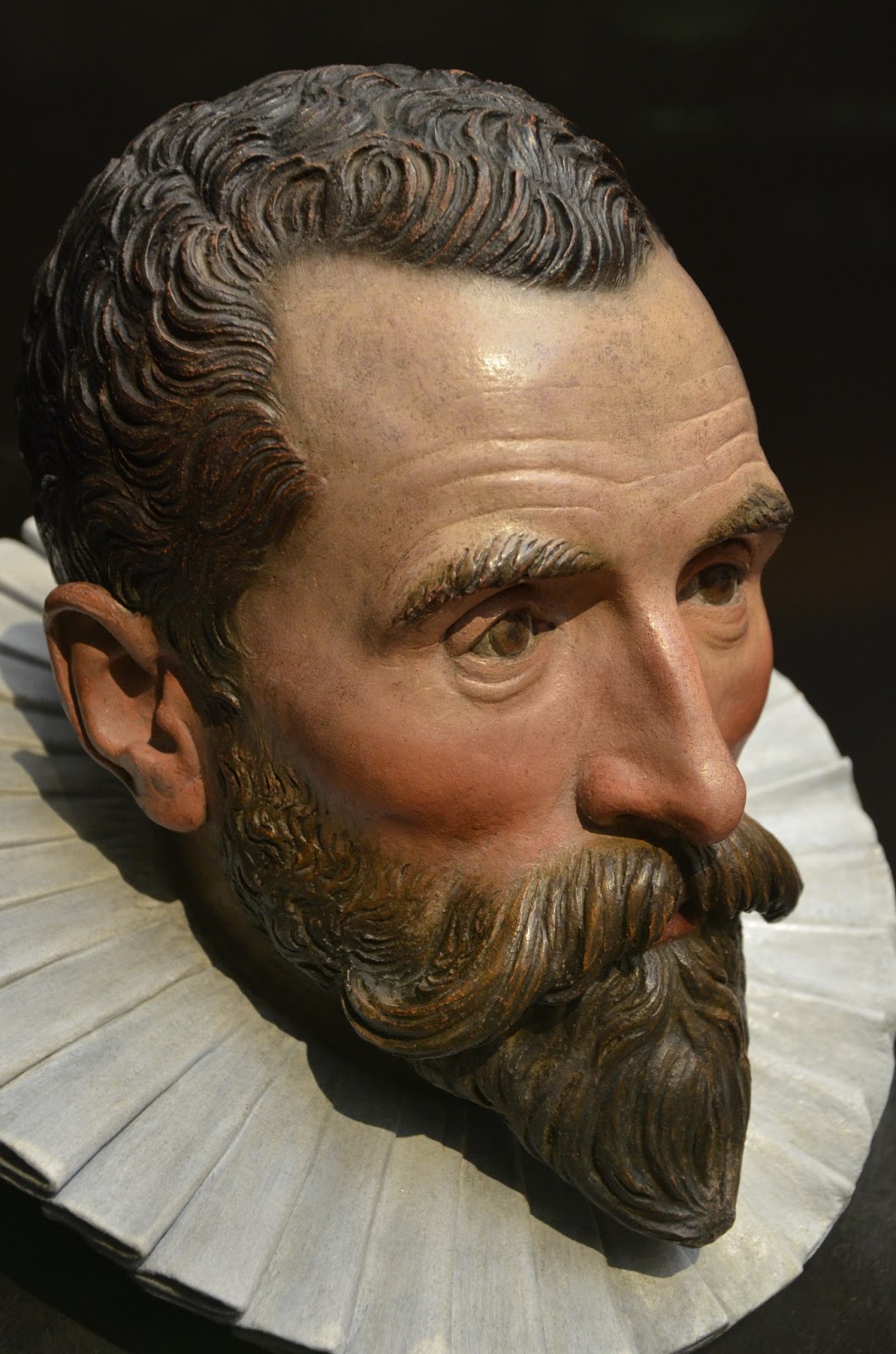
Next up were the Medieval galleries, though I had to remind myself that I was in an art gallery and that this was about attractive objects rather than daily life and context. Nevertheless, the combination of paintings and diverse 3D objects complemented each other well and kept the galleries varied and the quality high. The wooden statuary in particular is wonderful, and as Medieval displays go this is as good as I've seen since the Musee du Moyen Age (formerly the Musee de Cluny) in Paris.

amsterdam rijksmuseum gallery

amsterdam rijksmuseum gallery

amsterdam rijksmuseum gallery

amsterdam rijksmuseum gallery

amsterdam rijksmuseum gallery

amsterdam rijksmuseum gallery

amsterdam rijksmuseum gallery

amsterdam rijksmuseum gallery

amsterdam rijksmuseum gallery

amsterdam rijksmuseum gallery

amsterdam rijksmuseum gallery

The Rijksmuseum is understandably a very large institution, so below is a selection of images from the other galleries, encompassing a large range of collections, from weaponry and armour to costume, ceramics and model ships.

amsterdam rijksmuseum gallery

amsterdam rijksmuseum gallery

amsterdam rijksmuseum gallery

amsterdam rijksmuseum gallery

amsterdam rijksmuseum gallery

amsterdam rijksmuseum gallery

amsterdam rijksmuseum gallery

amsterdam rijksmuseum gallery

amsterdam rijksmuseum gallery

amsterdam rijksmuseum gallery

amsterdam rijksmuseum gallery

amsterdam rijksmuseum gallery

amsterdam rijksmuseum gallery

amsterdam rijksmuseum gallery

amsterdam rijksmuseum gallery

Anne Frank's House

The story of Anne Frank and her family is truly one of the most memorable and moving of the 20th Century, and of course just one highlighted episode which serves to tell the countless millions of similar personal tragedies now lost to history.  It would have seemed wrong to go to Amsterdam and not go and visit the house where she and her family attempted to hide from persecution.

I almost want to separate the two elements of the visit - firstly the story of Anne herself and the slight but touching traces of her that remain, and secondly the experience of mass international tourism that the house attracts. As my wife will tell you I'm not a big fan of being in huge crowds at heritage sites, much preferring to experience them when quiet and easier to contemplate. At Anne Frank's House, that is pretty much impossible. Although by going in the evening we missed the worst of the crowds, we still had to queue outside and then shuffle around the house like the world's most boring conga line.  This inevitably meant that in the earlier rooms, part of the offices and stores that formed the company occupying the 'visible' part of the building, we spent a long time going nowhere with very little to look at apart from the odd quote on the wall and some short video interviews.  However, when in the 'secret rooms' where the Frank family hid, the line would often seem to move forward at great speed, meaning that the key experiences such as seeing the posters Anne placed in her own room or the marks on the wall where Anne and her sister had their height measured over the years, were impossible to appreciate due to the people behind constantly forcing you forwards.  Not a great experience it has to be said, though the power of the story still thankfully manages to shine through.

I had decided that since, to my shame, I didn't have a copy of Anne Frank's diary on my bookshelf, I would buy one from the shop.  However, as the copies they had were imported from the UK, with a UK RRP of £7.99 printed on them, I certainly wasn't going to pay the 12 Euros they were charging!

Overall, despite my price and mass tourism grumbles, Amsterdam was a lovely place to explore, and I certainly hope to be able to experience more of the Dutch welcome in future visits to other parts of the country.


Tuesday, 4 June 2013

The Must Farm boats preview

I was absolutely delighted to be invited to the preview of a very special archaeological discovery this afternoon - the amazingly preserved Bronze Age material from Must Farm in Cambridgeshire.  Now, as a Romanist I confess that some elements of prehistory leave me a little cold, but some discoveries are simply astounding - and this one is right up there with the best of them.

The Must Farm site sits on the edge of the fens, within a modern brick pit, and on a stretch of the prehistoric River Nene.  The waterlogged deposits have preserved a wonderful and complex landscape, complete with fish weirs, dwellings, timber post alignments, tools, weapons and burials - the majority of which are preserved in incredible condition.  The excavations have been carried out by the Cambridge Archaeological Unit, but it seems that the support and assistance of the landowner, Hanson, and English Heritage has been crucial.

The preview event was held at Flag Fen, part of the same prehistoric fenland landscape as Must Farm and itself one of the most important Bronze Age sites in Europe.  Flag Fen is the new home to the most iconic of the finds, 8 complete or near complete log boats, the largest of which being an immense 9m in length.  The boats, made from oak, alder and (uniquely I think) lime, are about to embark on a lengthy conservation process within a newly constructed, and publicly visible, cold store.  The conservation process for the boats and the other amazing finds (such as the Iron Age sword with surviving wooden handle and willow scabbard) is being carried out by the York Archaeological Trust.

The boats will undergo 2 or 3 years worth of assessment and treatment at Flag Fen, before hopefully then being moved to a more permanent display at Flag fen or elsewhere.  One thing I rather liked was the name that has been given to each boat, though I have to confess that whereas I understand names like 'Dorothy' or 'Belinda', 'Toppled McClary' and 'French Albert - the Fifth Musketeer' left me wondering quite what the excavators were smoking at the time!

The site is far too detailed to go into here, and I wouldn't want to use images that I don't have permission for, so I'd urge you to head over to the official website for the project and have a good look at the wonderful objects and very well written descriptions over there.  In the meantime, here are some of my photos from the afternoon, both of the boats and around Flag Fen, including the newly redesigned museum displays.


Monday, 27 May 2013

Luxor graffiti and the great Chinese human flesh search

In recent years the Chinese internet has proved adept at naming and shaming those who have done wrong in the eyes of its many users.  People from politicians to cheating spouses, fraudsters and the tearaway children of millionaires have been 'outed' and identified through what is commonly known in China as 'human flesh searching' - using the mass of data freely available on the internet to find out a wrongdoer's identity and much more besides.

One recent incident has crossed into the worlds of archaeology and cultural tourism, and so particularly caught my attention.  A Chinese tourist called Shen was visiting the temple at Luxor in Egypt a few weeks ago and was appalled to see Chinese graffiti scrawled across one of the walls.  He posted a picture of the graffiti, which (with incredible wit and imagination) read 'Ding Jinhao was here' on his micro-blog and the machinery of the Chinese internet soon set to work to identify the culprit.


This photo taken at the Luxor Temple in Egypt on 6 May 2013 shows graffiti reportedly from a Chinese tourist

It turns out that Ding Jinhao is a 15 year old schoolboy from Nanjing who had carved his name for posterity some years earlier.  Now he has been named and shamed, it seems the pressure is getting to him.  His family has apologised on his behalf, promised that he has learned his lesson, and pleaded to now be left in peace.  Thankfully it seems like it will be possible to repair the damage caused to the wall, though it will of course never be as it was and should be irrelevant when discussing the severity of such mindless vandalism to historic monuments.

What is interesting is how the case has shed light again on the issue of Chinese tourists and how they behave.  Over the last few decades Chinese tourists have been flooding the globe, with wallets bulging enough to give them a warm welcome from many cash-strapped Western governments.  But of course having money is not an excuse for bad behaviour such as being noisy, messy and disrespectful of local customs and traditions.  Now, one excuse is that these Chinese tourists are quite newly rich and often travelling for the first time.  Even a basic knowledge of how other parts of the world live is often lacking, and travelling in large coach parties led by Chinese tour guides doesn't help them pick up any local customs or experience any meaningful contact with the residents of the places they visit.  Having said that, I think its pretty rich for Chinese tourists to be singled out in such a way.  Let's face it, we can all think of examples of British, American, French, Australian, Spanish, Italian or whatever tourists that make their more respectful countrymen wince with shame at their behaviour.  Being born in a western country and having traveled abroad before is certainly no guarantee of respectfulness, and I fear that Chinese tourists will soon have a reputation that they can't shake off but that most certainly don't deserve.

In fact, when it comes to graffiti, I'm pretty certain that I've seen more than my fair share of it on British historic sites, and not that much of it was written in Chinese.  In fact, some, like the example below from Croxden Abbey in Staffordshire, done by our far more respectful Victorian forebears...


Sunday, 12 May 2013

York - Roman baths and contemporary art with an archaeological twist

While on a trip to York yesterday (to celebrate my mum's birthday no less), I managed as always to get some heritage sightseeing in.

The first place was the Roman Baths museum, underneath a pub of the same name. I've been to York more times than I could possibly count, and have known about the existence of the Roman remains under this pub for many years but for some reason never gone in. I think it's because I'd always assumed it was a case of a few low walls and the odd bit of hypocaust in a bar amid the daytime drinkers, who you'd have to move aside to be able to see anything. Happily, I discovered that the remains are actually separate from the pub, in a little independent museum in the basement.


The museum consists of the remains of the baths (mainly the semicircular outline of the caldarium with numerous pilae) and a variety of scattered displays about the Roman army and some ceramic finds from the baths. Without wishing to be unkind, the museum displays are rather disjointed and not put together with a high budget or any great overarching interpretational strategy, however it is clearly a labour of love and deserves praise for that alone.


The panels attempt to put the bath's remains into the topographical context of Eboracum, and also into the wider social system of Roman bathing. Some elements of the display are rather incongruous though. Although admittedly a legionary bathhouse, this is taken to extremes in the amount of display taken over with replica military equipment - there are no less than five complete suits of lorica segmentata in the museum! Granted, the ability to try some on will definitely go down well with many visitors though.


A bit of the display also inexplicably refers to the worship of Mithras, which I'm pretty sure has no connection to the baths as the known Mithraeum in York is on Micklegate. The label was too far away for me to read though, so I might be mistaken...


Although again I'm not entirely sure why it was relevant to the remains, the little mock shrine (complete with 30p votive candles) was cute.  The Goddess the shrine was dedicated to was interesting though.  Named as 'Uberitas, Goddess of Plenty', I confess this is a deity I've never heard of.  Surely Ops, Pomona or Abundantia would be better Goddesses of plenty and abundance?  I'd be delighted to hear if anyone can enlighten me!


My second cultural adventure of the day was at St Mary's Church - a lovely venue now successfully used as a contemporary art gallery. Their new exhibition is called 'The Matter of Life and Death', and consists of ceramics created by artist Julian Stair alongside archaeological ceramics from the Yorkshire Museum collections. The overall theme is of death, and in particular the containers that people's earthly remains have been placed in, from the Bronze Age, Roman, Anglo Saxon and Medieval periods as well as ancient Egypt juxtaposed with Stair's own modern ceramics.


The exhibition is of particular interest to me as my own museum has recently had a contemporary art exhibition which has involved archaeological objects from the collections I curate.

Of course, my interest is in the historic objects more than the contemporary ones, but Stair's ceramics were of good quality, interesting form and juxtaposed well with the archaeological material, all of which was cleanly displayed and wonderfully not behind glass.  It was a risky approach, but one that has paid off as the connection that a visitor can get from an object without 8mm of safety glass in the way is extraordinary.


I was particularly interested to see that a group of Roman cremation urns still had cremated remains within them.  During our aforementioned exhibition in Lincoln, one visitor commented that they felt it was disrespectful for us to display cremated human remains as they are in storage - in sealed plastic tubs.  I would be very interested to know, in all seriousness, if that same visitor felt that displaying them within the urns they were discovered in increased the respectfulness - bearing in mind that they were on open display, and could have been touched (and, heaven forbid, even had bits removed) had a nefarious visitor so wished.


Saturday, 4 May 2013

Of moles and car parks - some recent Roman discoveries

There have been two interesting bits of news about Roman Britain in recent days.  The first involves the archaeologists at one of my old institutions, the University of Leicester.  Fresh from digging up Richard III, they've been investigating another of the city's fine car parks, this time turning up an interesting Roman cemetery.

If this habit of finding good archaeology under Leicester car parks continues, I think they might have to announce a new branch of archaeology - 'car parkaeology'!

The excavation was at a site outside of the Roman town of Leicester ('Ratae Corieltavorum') and discovered a hitherto unknown cemetery site.  While this is interesting enough, its not spectacular, as new Roman burial sites turn up fairly regularly.  The reason this one is particularly significant is that it seems to reflect a mixture of pagan and early Christian burial practices.  The burials date to around AD300, so a handful of years before the Emperor Constantine officially declared Christianity the official religion of the empire.  Even so it is debatable as to the extent that the new religion took hold in provinces such as Britain.  Conversely, the belief was hardly new at the time of Constantine and Christians almost certainly existed in Britain before then, though how openly they displayed their religion is questionable.


Image copyright University of Leicester
The main piece of evidence is a finger ring, made of jet, which was found with one of the 13 inhumation burials.  On the bezel is inscribed a design with a central vertical line and a large X through it, with the sections thus formed cross hatched.  It has been suggested that this reflects the letters I and X, and therefore a monogram of the Greek characters Iota and Chi, and reflecting Christ's initials.  This of course is very similar to the, perhaps better known, 'Chi Rho' symbol which consists of the first two letters of 'Christos' in Greek, seen below on the Lincolnshire ‘Walesby tank’.


Although there's been a lot of media coverage, you can see the University's own page on the excavation here.

The second item of Roman news has been in the form of archaeologist-moles excavating their own little pieces of the Roman fort at Epiacum in Cumbria.  I confess I've never been, but the site is high on my list to visit as it looks stunning, and deserves to be much better known - especially for those wonderfully preserved defenses.  The site's website can be found here, and I strongly suggest you have a look, and try and make your way there the next time you're in Hadrian's Wall country.


The site is a scheduled ancient monument, but those little velvety fellows are famous for their disregard of heritage legislation and tend to follow a more Victorian ethic of digging into every bit of archaeology they can find.  This has led to a project to survey their work and record the finds they unearth.  So far, sherds of nicely dateable of pottery (including Samian ware), beads and even a dolphin brooch have been unearthed.

I look forward to hearing more about their work in the future.  I'm not sure how well moles draw sections though...